
What happens after you write
You write two or three sentences about the decision. All four of us see it.
The first message, and what we do with it
Short fields, and nothing to attach. It reaches the four of us and stops there.
This goes to the four people who do the work. It does not go on a list, and it does not leave them.
What we ask for, and the step we ask for it at
The one who covers your sector writes back by name and says whether this is a file for us. That person is the one who would carry it. If it is not a file for us, the first reply says so and gives the reason. If it is, what follows is a call, a note in prose, and a signed engagement letter with a start date on it. The sequence is below, and so is the list of what we will not do before that letter is signed.
01
Step one, message
You write, and a person reads it
The form on this page reaches all four of us. Your message lands in front of named people, not an inbox. The one who covers your sector is the one who answers it. There is no qualifying call before that.
You do not need board papers, an approved budget line or a finished question. Two or three sentences about the decision in front of the board is enough. If the question is still shapeless, write that as well. Shapeless is the usual starting point, and naming it is the first step of the work. The reply comes in writing, from the person who read it, not from an address with no one behind it. If we are the wrong firm for this one, that reply says so and says why.
Before step one: nothing you have to go and find.
The form is short, and none of its fields need a document behind them.
02
Step two, one call
A call with the two people who would carry the file
Video, or a room if you are close enough. Most of the call goes on one thing: what the board is actually being asked to decide. That is often not the question printed on the agenda.
You talk. We take notes and read them back to you before the call ends, so you can hear whether we understood it. We bring no material, because we have not earned an opinion yet.
By the end you should know whether you want us near this decision. We should know whether the work fits in eight to twelve weeks.
Before step two: the names.
The people who will have to live with the outcome. You gave us the board date on the form. Still no papers.
03
Step three, note
We write back with the question as we would put it
It comes back as prose, not as slides. It carries the question as we would frame it, and which of the three services the file needs. Then the weeks, the fee, and the evidence we would need from you to start.
It also carries a paragraph on what would make us the wrong choice here. You can hand that note to your chair and it reads on its own, with none of us in the room. If the framing is off, say where, and a second version follows. Every version carries that same paragraph.
Before step three: whatever already exists.
Prior analysis, the last contractor’s material, the minutes where the question first appeared, however rough. If a confidentiality agreement has to come first, send yours. We sign the one your counsel already uses.
04
Step four, letter
A signed engagement letter with a start date on it
The letter names the two of us who carry the file, the dates and the fee. It also names the point at which the material passes to you in editable form.
Two of the four on every file, and one of the two is always a partner. No juniors on the analysis. The person who answered your first message stays with the file to the end.
Your legal team can redline the letter. Work starts on the date written on it, not on a date we name later. The first thing you receive after signature is a list of what we need from you and the week we need it in.
Before step four: one person.
Someone inside the organisation with the standing to answer a question without sending it up the chain. That person is the difference between an evidence review that runs four weeks and one that runs eight.
Who reads what you send
All four of us see what arrives. The sector you tick decides which of us replies, and that person is the one who would carry the file.
01
Mireille Osei

Partner, energy and utilities
She sat on an energy regulator’s appeal panel for four years. She has read files like yours from the other side of the table.
02
Tomas Reinholt

Partner, health systems
He built clinical trial protocols before Plenary, so he asks early what evidence would have to exist for the answer to change.
03
Nadia Fournier
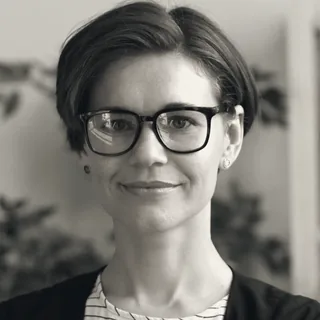
Principal, financial services
Writes most of the firm’s method.
04
Anders Vik

Principal, public infrastructure
Keeps the decision archive, the one cited in cases.
112 files between 2019 and 2026, across 9 sector regulators.
Two of the four carry every file, and one of the two is always a partner. Where the person who replies is a principal, the partner comes onto the file with them.
If your sector sits outside these four, whichever of us is closest to it answers, and says whether the work is ours to take. No assistant screens the form. No junior writes the reply.
More about the four of usWhat we will not do yet
01
We do not answer the question on the call.
We have not read your papers yet. An opinion formed without them is not one you could defend to a regulator.
02
We do not send a deck, then or later.
The note in step three is prose, and so is everything after it.
03
We do not price before the call.
A number without the scope attached tells your chair nothing.
04
We do not ask for confidential material before a confidentiality agreement is signed.
Yours, not ours.
05
We do not begin on a verbal yes.
A verbal yes leaves no record of what was agreed. That gap is what this firm exists to prevent.
06
We do not chase.
If it goes quiet we write once more and then stop. Your message stays open on our side until you close it.
If the board is not there yet
Sometimes the question is still forming, or the committee has not agreed there is a question. That is where step one does the most work. Framing the question is the first of the three services, not a favour before the work starts.
Five files are written up in full
01
A tariff decision a regulator reopened nineteen months later.
02
A hospital network where the evidence arrived after the vote.
03
A bank whose risk committee and strategy committee read the same data in opposite directions.
04
An eleven year water programme where the previous contractor left four hundred slides and no record of the alternatives.
05
An insurer whose board asked for eight pages, and the cut changed the analysis.
The method pieces sit under Insights, including the one on how to say what you do not know.